On this page
The first 90 feet: Elevating the customer experience
The moment a bill pay provider contract is signed, a customer’s expectations shift from promise to proof. Because bill pay is a high‑trust, high‑frequency service, providers need immediate reassurance that onboarding will not disrupt their customers’ ability to make payments, access account information, or maintain seamless payments continuity. What follows is no longer just about what was sold, but how seamlessly that promise becomes real. Customer onboarding is the first true test of trust, where confidence is either reinforced or quietly eroded. Too often, organizations treat onboarding as a handoff instead of a defining experience, underestimating how much this early window shapes long-term perception, adoption, and success. Rethinking onboarding means recognizing it as the bridge from signature to value, not simply a checklist to complete.
From a customer’s perspective, onboarding is measured in moments, not milestones. Simple questions quickly surface: Why doesn’t my card work anymore? Where is my history? What is my login? Who is this new company? Each question reflects a deeper concern: continuity of service, data preservation, secure access, and confidence in the brand they’ve chosen. When these questions go unanswered or are addressed too late, friction replaces trust. Great onboarding anticipates these concerns before they become problems, ensuring that transitions feel intentional, informed, and controlled rather than disruptive or confusing.
At its best, onboarding delivers confidence, continuity, and clarity in every interaction. Customers should feel assured that what worked yesterday still works today, what matters to them hasn’t been lost, and they clearly understand what’s changing and what isn’t. Research supports this view, showing that high-quality onboarding is a critical driver of long-term engagement and customer success when it extends beyond technical execution to include coordinated cross-functional alignment, clear communication, and shared ownership across teams. When onboarding is treated as a strategic capability rather than a one-time operational task, organizations enable faster time to value, stronger customer relationships, and more sustainable success over time.
Onboarding is a team sport: roles, rituals, and cadence
Successful onboarding is never the result of a single team or role operating in isolation. It requires a cross-functional team that brings together project managers, product owners, developers, operations, and business stakeholders, each accountable not only for their domain but also for the overall outcome. This is where “extreme ownership” matters. When every participant understands how their decisions impact customer experience end to end, onboarding shifts from a series of tasks to a coordinated effort with shared responsibility for success.
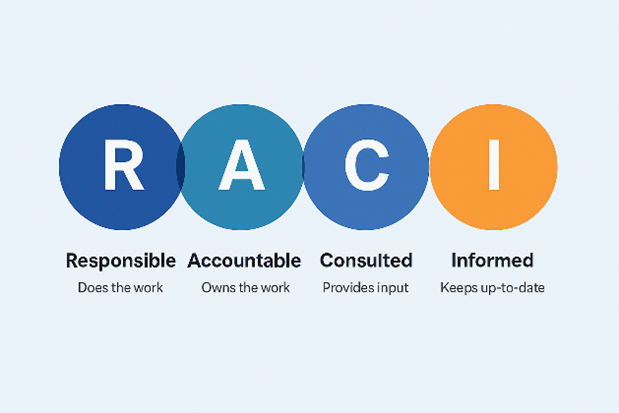
That coordination is enabled by a clear operating system. A strong onboarding motion starts with a joint kickoff that aligns stakeholders on objectives, success criteria, and risks from day one. Defined RACI models remove ambiguity, while weekly risk reviews create space to surface issues early, before they become customer-visible problems. Issue SLAs and disciplined change control provide guardrails, ensuring that progress doesn’t come at the expense of stability or trust. These rituals create predictability for teams and confidence for customers, even as complexity increases. Given how dependent consumers are on reliable bill payment channels, billers need confidence that every aspect of onboarding—from data migration to authentication—will safeguard continuity and preserve customer trust.
Equally important is the ability to listen beyond what is explicitly stated. Customers often articulate immediate needs, but the real risks lie in downstream impacts: how a data change affects reporting, how an authentication decision affects support volume, or how a timing shift alters settlement or reconciliation processes. Great onboarding teams anticipate these ripple effects, asking not just what needs to be done, but what could break, confuse, or erode confidence if we get this wrong. Designing those latent requirements in mind is what separates functional onboarding from exceptional onboarding.
When roles are clear, rituals are consistent, and teams are attuned to both spoken and unspoken cues; onboarding becomes resilient. Instead of relying on last-minute heroics, organizations build a cadence that absorbs change, manages uncertainty, and keeps the customer experience intact. That discipline enables onboarding teams to deliver confidence, continuity, and clarity, no matter how complex the transition.
- Cross-functional cast: Project managers, product owners, developers, business stakeholders. Success requires seamless collaboration and “extreme ownership.
- Operating system: Joint kickoff, RACI, weekly risk reviews, issue SLAs, and change control discipline
- Listening beyond the spoken: Surfacing latent requirements, designing for downstream impacts (not just what’s “in front of you”)
The rocket launch analogy: why planning beats heroics
Onboarding is more like launching a rocket than most teams realize. The stakes are high, failure is not an option, and success depends on dozens of interdependent systems working in precise coordination. In both cases, outcomes aren’t determined in the moment of launch or cutover; they’re determined by the quality of the planning, alignment, and choreography that happened long before. When onboarding relies on heroics to save the day, it’s often a signal that the upstream system failed. Great onboarding, like great launches, is intentionally designed so that nothing dramatic must happen at all.
That discipline shows rigorous pre-flight checks. Environment readiness must be validated, data cutover plans rehearsed, rollback criteria clearly defined, and war room protocols established before customers are ever impacted. These aren’t bureaucratic hurdles; they’re confidence-building mechanisms. They ensure teams know exactly how to respond when conditions change and prevent small issues from cascading into customer-visible failures. The goal isn’t to eliminate risk; it’s to make risk visible, manageable, and reversible.
Equally critical is telemetry and the use of clear go/no-go gates between phases. Objective criteria, rather than optimism or schedule pressure, should determine when it’s safe to move forward. Adoption signals, error rates, data reconciliation results, and customer readiness all provide real-time insight into whether the system is behaving as expected. By treating onboarding as a series of gated promotions rather than a single leap, teams create space to pause, correct, and stabilize. That mindset replaces last‑minute heroics with repeatable success and gives customers confidence that their transition is being handled with the same care and rigor as any mission where failure is not an option.
- Parallel with launches: high stakes, no fail mindset, interdependent systems, and meticulous choreography
- Preflight checks: environment readiness, data cutover plans, rollback criteria, war room protocols
- Telemetry & go/nogo gates: objective criteria for promotion between phases
What you don’t know at signature, and why that’s okay
At the moment a contract is signed, only a fraction of the final solution is truly known—a reality that is common in complex initiatives, especially in bill pay migrations—
and well documented in academic research on uncertainty management. Rather than attempting to lock down every detail upfront, high-performing onboarding teams design for learning by intentionally shaping scope: delivering value in phases, setting explicit change budgets, and establishing guardrails that distinguish what must be perfect from what is simply good enough to move forward. Peer-reviewed research shows that projects facing high uncertainty perform better when they adopt structured mechanisms to reassess assumptions, manage evolving conditions, and progress incrementally instead of relying on fixed, front-loaded definitions. Decision logs and architecture decision records (ADRs) reinforce this discipline by making trade-offs explicit and preserving context as solutions evolve, allowing teams to adapt without losing alignment and giving customers confidence that change is deliberate, not reactive.
When uncertainty is treated as something to manage, not eliminate, onboarding becomes adaptive, resilient, and better equipped to deliver outcomes despite complexity.
The importance of working with the right partner
In payments, onboarding has evolved alongside the ecosystem’s increasing complexity. What once relied on informal playbooks and one-off integrations has matured into a structured onboarding model supported by purpose-built tooling, repeatable operating patterns, and a growing partner ecosystem. At ACI Worldwide, this evolution reflects a broader industry shift: onboarding is no longer about simply going live; it’s about helping customers modernize safely, preserve trust, and deliver uninterrupted service in an always-on environment. As payment experiences become the primary digital touchpoint between billers and consumers, the margin for error in early implementation has effectively disappeared.
That reality has driven a fundamental shift in mindset, from handoff to ownership. The most effective partners treat onboarding as a product, not a project: defined SLAs, outcome-based metrics, and closed-loop feedback mechanisms replace ad hoc coordination. This approach aligns teams around shared accountability and ensures that learning from one onboarding improves the next. At ACI, leadership has consistently emphasized that customer experience and operational reliability are inseparable. As Ron Shultz, EVP and General Manager of ACI Speedpay®, has noted in a Paypers interview, when it comes to payments, simplicity and reliability matter most, “Life is hard, let’s make bill pay easy.” That ethos shows up not just in product design but also in how onboarding is structured to reduce friction, surface risks early, and build confidence from day one.
“Life is hard, let’s make bill pay easy,”
Ron Shultz, EVP and General Manager, ACI Speedpay
Underlying this model are clear principles that guide execution: customer-in metrics over internal milestones, zero surprise cutovers instead of last-minute recoveries, proactive communication rather than reactive support, and a disciplined “test like production” mindset. These principles recognize that trust is earned during transitions, not after them. By combining deep domain expertise with a mature onboarding operating system, the right partner helps customers navigate change without disruption, turning complexity into a managed experience and onboarding into a strategic advantage rather than a necessary hurdle.
Conclusion: designing trust before it’s tested
The moment a bill pay customer signs a contract isn’t the end of the sales journey; it’s the beginning of the relationship. As we’ve explored, onboarding is where trust is first tested; expectations meet reality, and long-term outcomes begin to take shape. When onboarding is treated as a strategic capability, anchored in clear ownership, disciplined operating rhythms, and intentional planning, it becomes a powerful lever for confidence, continuity, and clarity rather than a source of friction or risk.
Great onboarding doesn’t rely on heroics. It relies on systems: shared accountability across teams, proactive risk management, and the humility to acknowledge what isn’t yet known at signature. By designing for uncertainty, listening beyond what customers explicitly say, and planning transitions with the same rigor as any mission-critical launch, organizations can turn complexity into a managed, predictable experience. That’s how onboarding moves from a necessary step to a true competitive advantage.
This is only the first part of the story.
Coming in Part 2: From principles to practice
In Part 2, we’ll move from mindset to execution—looking at how these principles show up in real onboarding motions and what separates good implementations from truly exceptional ones. Highlights will include:
- How to translate “The first 90 feet” into measurable outcomes and operational metrics
- Practical examples of gated onboarding phases, telemetry, and go/no-go decisioning
- What mature onboarding organizations do differently to sustain consistency at scale
- How onboarding insights feed product, operations, and customer success over time
If onboarding is where trust is built, or broken, then how it’s designed matters more than ever. Stay tuned for Part 2, where we’ll explore how to operationalize these ideas and turn onboarding into a repeatable engine for customer success.
Related content

Never miss a payment
The next era of bill pay: Meeting customers where they are—and where they are going.

ACI Speedpay Biller Impact Study: A new era in bill pay has arrived
Discover the strategies and innovations shaping the next era of bill payment

The case for lenders to accept debit card payments
There is a strong, growing consumer preference for using debit cards with bill payments, especially among younger generations

Why modern bill pay requires more than the lowest-cost rail
Billers across industries, from mortgage servicing to credit cards, utilities, and insurance, are actively modernizing their bill pay infrastructure.

The modern debit card: The engine behind seamless payments
Cards continue to play a central role in bill pay and recurring payments, giving customers a familiar, trusted way to complete transactions across channels.

Joseph Frumento is a dynamic leader in the fintech and payments industry, currently serving as Director of Strategic Implementations at ACI Worldwide. With a strong focus on client success, he excels in project leadership, solution delivery, and driving innovation across retail money transfer, bill payment, digital currencies, and CX/UX. Joseph's expertise has been showcased through presentations at industry events, such as ICUX, where he discussed work and asset modernization alongside partners from Duke Energy. A graduate of Adelphi University, Joseph is passionate about achieving excellence through vision, execution, and accountability.