On this page
Fuel and convenience retail is entering a new era defined by connected commerce, real‑time personalization, and increasingly digital consumer expectations. Modern payments sit at the center of this shift, enabling unified customer identity, frictionless checkout, stronger fraud protection, and new revenue opportunities across the forecourt and in‑store journey.
As the industry evolves from legacy POS systems and siloed channels to data‑rich, integrated experiences, retailers are leveraging payments as a strategic growth engine rather than an operational necessity.
What’s different about 2026 is that many shifts are converging all at once. Margin pressure, rising fraud risk, fragmented customer journeys, and new energy models are forcing fuel and convenience retailers to rethink how every transaction supports engagement, efficiency, and growth. Payments are no longer just enabling the sale, they are shaping how retailers identify customers, monetize time on site, and orchestrate experiences across physical and digital touchpoints.
Trend #1: Engage customers before, during, and after the pump
The modern forecourt is no longer a transactional stop—it’s a multi‑touchpoint engagement opportunity. Retailers are investing in mobile apps, loyalty programs, personalized pricing, and on‑pump promotions to drive customers in‑store and increase spend. Fresh food, grab‑and‑go items, and subscription‑based services such as coffee or car‑wash programs are becoming core differentiators
Engagement is also extending beyond fueling, with order‑ahead, eCommerce, delivery‑to‑car, and diversified last‑mile options creating new purchase moments.
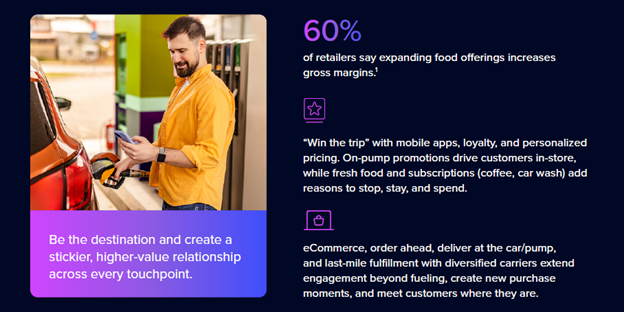
Payment implications: Modern payments connect identity across channels via tokenization, enabling personalized pricing, loyalty earning, and optimized checkout.
Trend #2: POS and site technology modernization
Security and speed remain board‑level priorities. With the expansion of connected forecourt systems, the attack surface is widening, making validated point‑to‑point encryption (vP2PE), tokenization, and stronger POS systems essential.
Mobile and in‑car payments authorization now play a significant role in improving throughput and customer satisfaction.
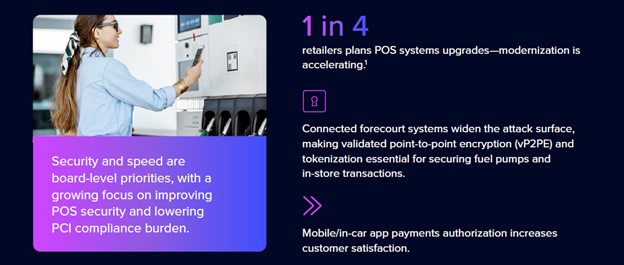
Payment implications: Modern POS and payment platforms enable faster checkouts, fewer declines, stronger fraud control, and a reduced PCI burden through encryption and tokenization.
Trend #3: Omnichannel integration for a unified customer view
As mobile behavior, loyalty apps, eCommerce flows, and connected forecourt equipment proliferate, siloed systems hinder retailers from delivering seamless journeys. A unified identity across touchpoints enables mission-based segmentation, more relevant offers, and more accurate targeting, far beyond classic blanket discounts.
Payment implications: Payments orchestration supports unified acceptance and portability of loyalty benefits across the site: forecourt, app, and in-store.
Trend #4: Data‑driven cost control and leaner operations
Technology has evolved from a cost‑reduction tool to a strategic growth lever.
Electronic shelf labels, automation, and optimized staffing models reduce operational strain, while payments data has emerged as a critical operational signal. Retailers can now detect failing terminals, identify friction points, and optimize throughput using real‑time payment insights.
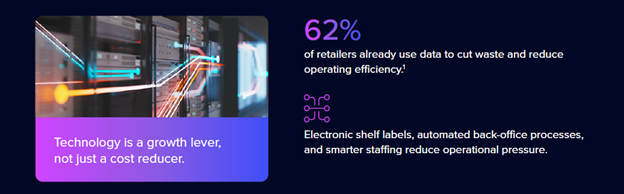
Payment implications: Payments data becomes a key operational signal for identifying friction points, such as failing terminals and optimizing throughput.
Trend #5: Loyalty as a revenue engine
Loyalty is shifting from “program” to “product”: a personalized value exchange tailored to each customer. Offers are becoming smarter and more individualized, driven by visit frequency, purchase behavior, and mission type.
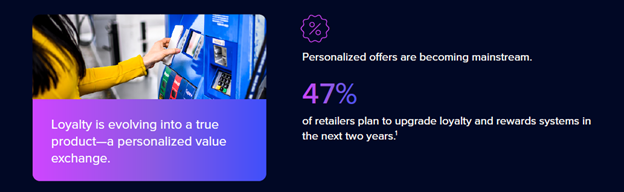
Payment implications: Loyalty increasingly ties into payments, enabling instant rewards and more relevant offers.
Trend #6: AI transforms pricing, operations, and security
AI is transforming core retail functions—from automated dynamic pricing to loss prevention, demand forecasting, and fraud detection. Retailers now leverage purchase history, time‑of‑day patterns, and visit frequency inputs to deliver relevant offers and optimize pricing.
AI‑optimized checkout experiences reduce wait times and enhance convenience, while intelligent surveillance and smarter fraud models strengthen asset protection.
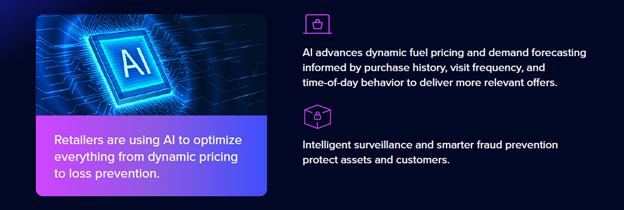
Payment implications: AI strengthens fraud protection end to end, from stopping card skimming to account takeovers.
Trend #7: EV transformation: Turning dwell time into revenue
With 84% of retailers planning for EV charging in their long‑term strategy, the backcourt is becoming a multi‑energy hub. Even when charging operations are outsourced, extended dwell time creates valuable opportunities for foodservice, retail purchases, and add-on services.
Emerging technologies like vehicle‑to‑grid (V2G) will introduce entirely new monetization models that depend on flexible, interoperable payments.
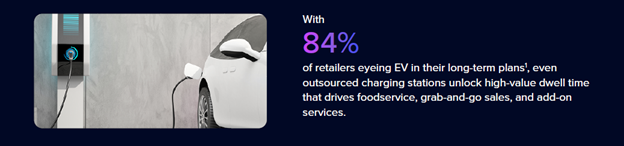
Payment implications: EV infrastructure requires robust digital payments, app‑based authorization, and usage‑based billing to support new customer journeys.
Conclusion: The future forecourt runs on connected commerce
The competitive edge in fuel & convenience retail is shifting from location and price to experience, relevance, and operational excellence. Modern payments—unified, secure, tokenized, and data‑rich—sit at the center of this transformation.
What retailers expect from payment partners in 2026
Taken together, these expectations reflect a broader shift: retailers are moving away from point solutions and toward platform partners that can scale across channels, payment types, and future energy models without adding operational complexity.
Retailers want payments to become “not my problem anymore.”
That means:
- Integrated systems across channels and touchpoints
- Lower downtime and stronger payments fraud protection
- Easier tender additions, flexibility beyond acquirer capabilities
- Reduced PCI compliance scope and audit burden
- Future‑proof architecture that scales with new payment methods, forecourt tech, loyalty upgrades, and evolving commerce channels
Retailers that evolve now will be positioned to not only “win the trip” but also capture every revenue moment across the customer journey, from the pump to the store to the app, and increasingly, to the charging station.
As fuel prices fluctuate over time, the ability to respond quickly to changing economic conditions becomes a core competitive advantage, not a reactive measure. Learn more about ACI’s fuel‑focused payments offering.
Related content

The new rules of fashion and sportswear payments
Discover how 3,000 fashion shoppers pay, shop, and return, and what it means for retailer conversion and loyalty.

AI commerce is here—and it’s moving at machine speed
Discover how AI-powered agents are reshaping transaction flows—and what merchants must do to stay competitive, secure, and revenue-ready

The Revenue Hidden in Plain Sight
Learn how to regain one of the largest pools of revenue most merchants already own.

Unlocking Opportunity: How Payments are Powering Merchant Growth
Download the comprehensive report to learn how your peers are future-proofing their payments strategy and unlocking new opportunities to stay competitive in today’s digital-first markets.

PSD3/PSR: What changes for PSPs and how to get operationally ready
Readiness isn’t a legal checkbox. It’s an operational program that touches product design, risk controls, merchant experience, and customer support.
How AI Agents Are Redefining Online Shopping
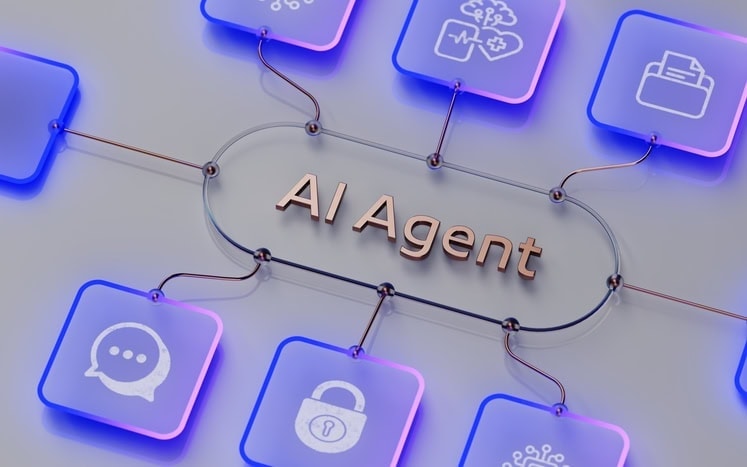
eCommerce is entering a new phase: one where shopping journeys are no longer defined by clicks, tabs, and comparisons. Instead, AI agents are beginning to shop on behalf of consumers: researching products, comparing options, assembling carts, and even completing purchases within pre‑approved boundaries.

Dan Coates is the director of merchant product management for ACI Omni-Commerce with over 25 years of payments experience. He focuses on solution use-cases, insight and thought leadership for merchant retail in the card present, eCommerce and mCommerce space. Dan has led payments implementations for major retailers, developed payments software for ACI’s Omni-Commerce platform, and implemented large scale projects for many top global brands. His earlier roles at ACI include senior lead positions in engineering, architecture, consulting, and solution evangelist.